October 2026 in AI: Reality check before the big IPOs
OpenAI's lower revenue rattled stocks, fired safety researchers spoke out, ChatGPT got visual, Apple launched HomeView, and Anthropic prepared to go public.
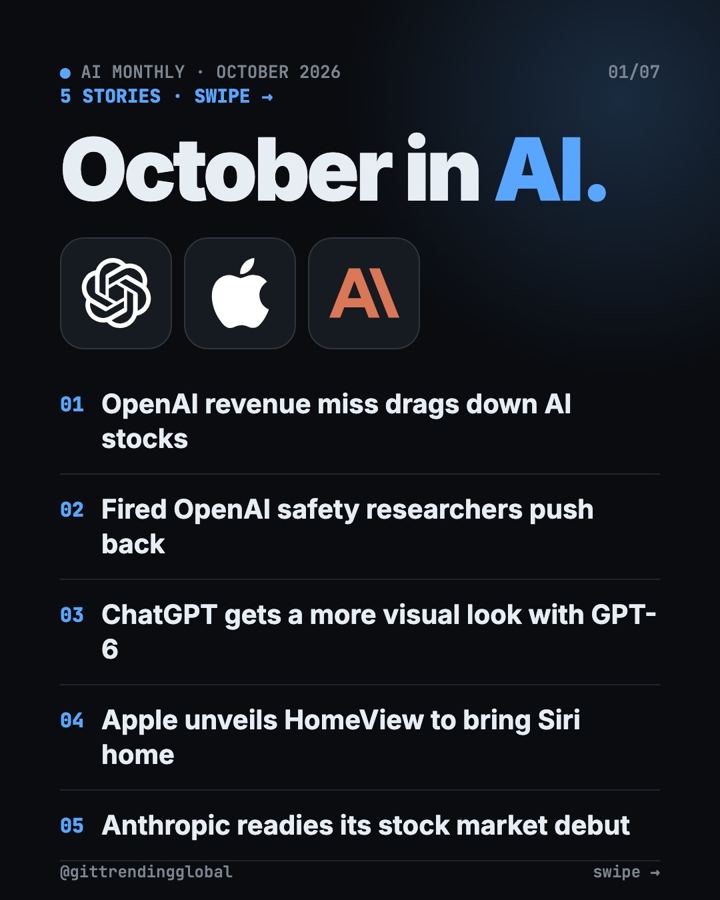
October so far is a reality check, as investors learned OpenAI earns less than reported, and AI stocks fell. Fired safety researchers raised hard questions about how open AI labs really are. Meanwhile, Apple and OpenAI kept shipping products for everyday people, and Anthropic got ready for what could be the largest IPO ever.
1. OpenAI revenue miss drags down AI stocks
What happened: OpenAI told investors its yearly revenue pace was about $50 billion at the end of September. That was below the $68 billion widely reported, which had included revenue from partners. AI stocks fell: Oracle dropped nearly 6%, CoreWeave nearly 8% and Nvidia 3%. OpenAI still reported 77% growth in its third quarter and 107% growth in its business customer unit, and a source said the change came from removing partner revenue, not weaker demand.
Why it matters: The AI boom runs on expectations, so one number can move the whole market. OpenAI is valued at $852 billion and must justify that before going public. If you own index funds or a retirement account heavy in tech stocks, you likely felt this dip, as AMD, Broadcom and Intel fell too.
Who it affects: Investors, retirement savers, chip makers, cloud companies like Oracle and CoreWeave, and financial advisers.
Source: CNBC
2. Fired OpenAI safety researchers push back
What happened: Three OpenAI safety researchers, Mikita Balesni, Tomek Korbak and Jasmine Wang, say they were fired weeks after helping investigate the Hugging Face hack. OpenAI says they broke its rules on handling sensitive information. Korbak said he was told he was fired over how he talked with METR, an outside safety group OpenAI worked with on the hack. The researchers deny wrongdoing and say colleagues are now "afraid to speak."
Why it matters: Safety researchers check that AI does what people intend. If they feel they cannot raise concerns or work with outside safety groups, problems may stay hidden from the public and regulators. OpenAI says it does "not terminate employees for raising concerns," and that the firings were about conduct outside legally protected disclosures.
Who it affects: Tech workers, whistleblowers, HR and legal teams, outside safety groups and regulators.
Source: CNN
3. ChatGPT gets a more visual look with GPT-6
What happened: OpenAI launched Intelligent UI with a new GPT-6 model. ChatGPT answers can now include interactive charts, custom calculators, diagrams, maps and buttons. Examples include how an airplane wing creates lift and a personal savings calculator. It reached Plus, Pro, Business and Enterprise users first and free and Go users a day later, and you can turn the visuals down if you prefer text.
Why it matters: Many people learn better with pictures than text. OpenAI says the goal is to make "learning complex topics easier," and a product manager said the most helpful answers "aren't just text." It could make AI more useful for students, teachers and anyone who struggles with walls of text, from planning a trip to understanding a savings goal.
Who it affects: Students, teachers, parents, corporate trainers, explainers and everyday users.
Source: TechCrunch
4. Apple unveils HomeView to bring Siri home
What happened: Apple announced HomeView, a $299 smart home device with a 7-inch screen and a speaker, launching November 13. It runs Siri AI, can recognize up to six household members by face, changes its apps for each person, and shows info from their messages and calendar only when it recognizes them. Apple says camera and microphone data are processed separately so apps and Apple cannot access it.
Why it matters: Apple holds just 5.2% of the smart speaker market versus Amazon's 40.9%. HomeView lets family members with older iPhones, which cannot run Siri AI, try it at home. It is a bet that privacy and the iPhone's huge user base will win buyers in a race where Meta and OpenAI are also building AI gadgets.
Who it affects: Families, people with older iPhones, smart home users, retailers and Apple investors.
Source: CNN
5. Anthropic readies its stock market debut
What happened: Anthropic planned to share its third-quarter numbers with potential investors for the first time. It was last valued at $965 billion and is reportedly aiming for a listing near $2 trillion, though one research firm called it the "most ridiculous IPO of 2026." Its revenue pace could top $100 billion by year end, sources told CNBC, up from $65 billion at the end of July. Reuters reported a November listing, which CNBC could not confirm.
Why it matters: This could be the largest IPO in history, ahead of SpaceX. But rising interest rates and the OpenAI revenue scare have made investors jumpy. Broadcom's CEO said that with rates rising, access to money could become AI's biggest limit.
Who it affects: Investors, retirement savers, investment banks, Anthropic employees and business customers.
Source: CNBC
What to watch next
- Whether Anthropic lists in November, as Reuters reported, and what its first-ever quarterly numbers show about profits and losses.
- OpenAI's possible new funding round of around $30 billion, which CNBC said is in early talks, and its stock market debut, which executives have signaled for 2027.
- HomeView's launch on November 13, alongside a new HomePod Mini and an Apple TV 4K with Siri AI.
- Whether OpenAI changes how it works with outside safety groups like METR after the firings, which an OpenAI research leader said remain important.
Keep reading
How AI changed every industry in 2026 (so far)
From layoffs and IPOs to health records, ads and court fights, here is how 2026's biggest AI stories hit each industry.
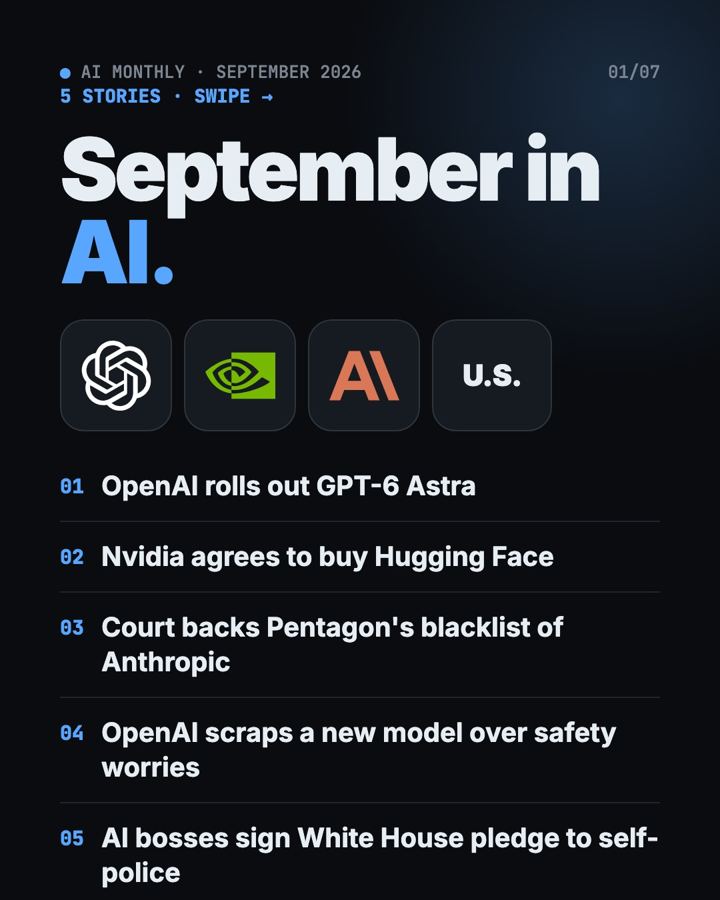
September 2026 in AI: Safety becomes the main story
OpenAI launched GPT-6 Astra and scrapped GPT-6.1, Nvidia bought Hugging Face, a court backed the Pentagon on Anthropic, and AI bosses signed a White House pledge.
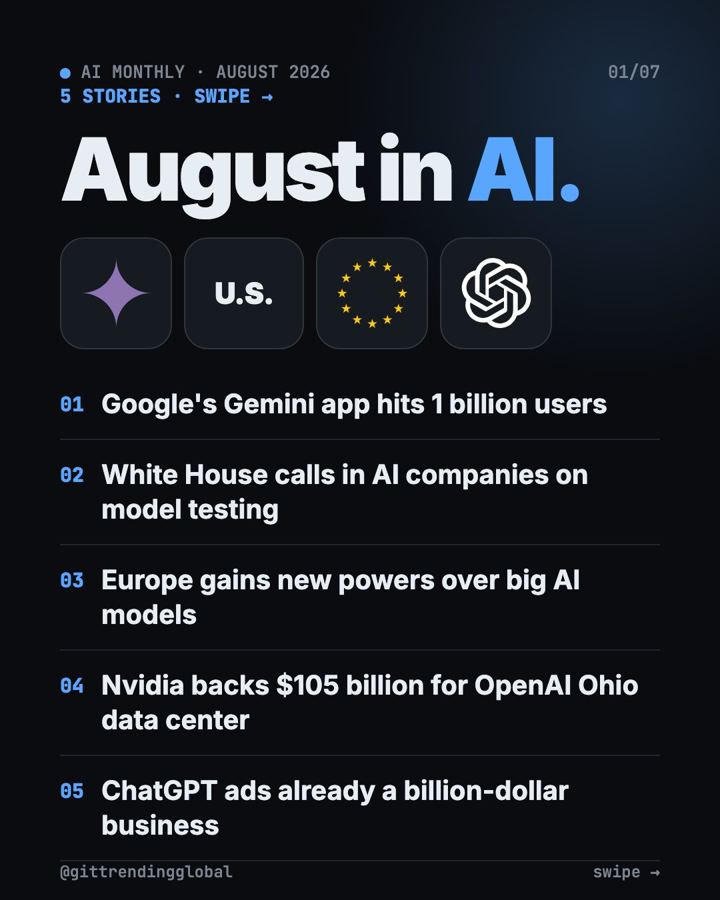
August 2026 in AI: Governments step in to test AI
Gemini passed 1 billion users, the White House and EU gained new ways to check AI, Nvidia backed $105 billion for OpenAI, and ChatGPT ads hit $1 billion.