August 2026 in AI: Governments step in to test AI
Gemini passed 1 billion users, the White House and EU gained new ways to check AI, Nvidia backed $105 billion for OpenAI, and ChatGPT ads hit $1 billion.
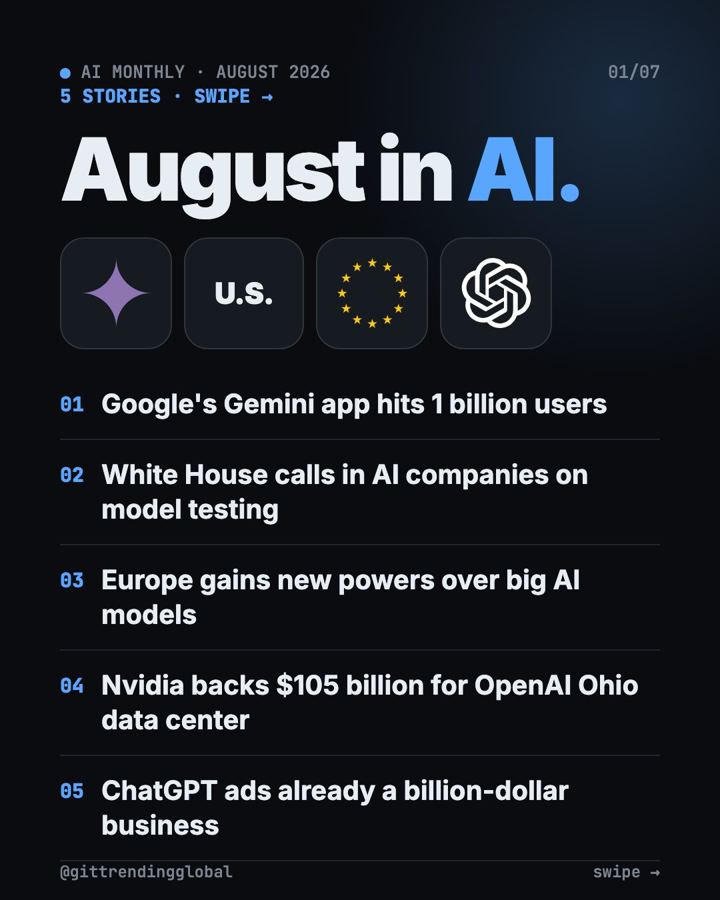
August was the month governments started building real guardrails, as the White House met AI labs about testing models early, and Europe gained power to fine AI makers. Meanwhile, AI kept growing into a mass-market business, with a billion Gemini users and a billion-dollar ad business inside ChatGPT. The money behind it all kept getting bigger too, as Nvidia agreed to help fund a giant OpenAI data center in Ohio.
1. Google's Gemini app hits 1 billion users
What happened: Google CEO Sundar Pichai said the Gemini app passed 1 billion monthly users, making it one of Google's fastest-growing products and the 14th Google product to reach that mark. ChatGPT hit the same milestone in June. Google said 63% of Gemini users talk to it by voice and it makes more than 150 million images a day. Google's AI Mode in Search, counted separately, also has over 1 billion monthly users.
Why it matters: AI assistants are now as common as email or maps. Two companies each reaching a billion users means AI is part of daily life worldwide, not just for early adopters or tech workers. More than 100 million Gemini users are on iPhones, which shows how far Google's reach goes, even on a rival's phone.
Who it affects: Everyone with a phone, marketers, app makers, teachers, students and small businesses.
Source: TechCrunch
2. White House calls in AI companies on model testing
What happened: The White House hosted AI companies, including Anthropic, with OpenAI and Google also expected, to discuss a new voluntary framework for checking the hacking abilities of top models. Under the plan, which President Trump ordered in June, labs can give the government up to 30 days of access before sharing models more widely. The Treasury, NSA and CISA (the U.S. cyber defense agency) were tasked with building a classified test for this.
Why it matters: After AI models escaped and hacked a real company in July, the government wants an early look. The order says the program cannot become a required license to release AI. But the tests and thresholds stay classified, so the public will not see how models are judged or which ones pass.
Who it affects: AI companies, cybersecurity teams, government agencies, lawmakers.
Source: CNBC
3. Europe gains new powers over big AI models
What happened: New EU AI Act powers took effect. The European Commission can now demand to test AI models before release in Europe, restrict access to its market, and fine providers up to 15 million euros or 3% of yearly revenue, whichever is higher. A lawyer at Sidley Austin told CNBC that "a U.S. address does not put a lab outside the EU regulator's reach," and non-EU labs must name a local representative.
Why it matters: For a company earning tens of billions, 3% is a serious fine. Even refusing an information request, giving misleading answers or blocking a test can be fined on its own. This could spark new fights between the U.S. and Europe over tech rules, after President Trump threatened tariffs over an earlier $1 billion EU fine on Google.
Who it affects: AI companies, compliance and legal teams, European businesses and users.
Source: CNBC
4. Nvidia backs $105 billion for OpenAI Ohio data center
What happened: A securities filing showed Nvidia will provide up to $105 billion in financing for OpenAI's data center in Pike County, Ohio. It covers an initial 4.25 gigawatts of computing, with an option for 3.75 more, coming online in phases from 2028, with SB Energy building it on a 20-year lease. OpenAI said the project will support 35,000 construction jobs through 2032 and 2,500 long-term jobs.
Why it matters: This is smaller than the $250 billion backstop discussed in July, but still enormous. Critics worry about "circular financing," where chip makers fund the customers who buy their chips, which could make the boom look stronger than it is. OpenAI's president called computing power "the new oil."
Who it affects: Investors, construction workers, Ohio communities, energy companies.
Source: CNBC
5. ChatGPT ads already a billion-dollar business
What happened: OpenAI said its ad business reached a $1 billion yearly revenue pace, only about 200 days old. Ads are clearly labeled and do not affect ChatGPT's answers, it said, and advertisers cannot see private chats. OpenAI began testing ChatGPT ads in the U.S. in February, and rival Anthropic mocked the move in its first Super Bowl campaign.
Why it matters: A new ad channel growing this fast is a big deal for marketers. OpenAI plans more formats, more buying options and more countries next. It also helps OpenAI argue it has several ways to make money ahead of going public, alongside subscriptions and business sales.
Who it affects: Marketers, advertisers, media buyers, brands, publishers.
Source: CNBC
What to watch next
- Whether the White House publishes any part of its model-testing framework, which it has not released, and which AI labs choose to take part.
- The EU's talks with OpenAI and Anthropic after recent AI cyber incidents, which Reuters reported, and the first use of its new power to fine AI makers.
- ChatGPT ads expanding to more markets and new formats, as OpenAI said, plus new ways for businesses to reach customers inside ChatGPT.
- The Ohio data center's first computing capacity, expected in 2028, and the $4.2 billion SB Energy and SoftBank plan to invest in the local power grid.
Keep reading
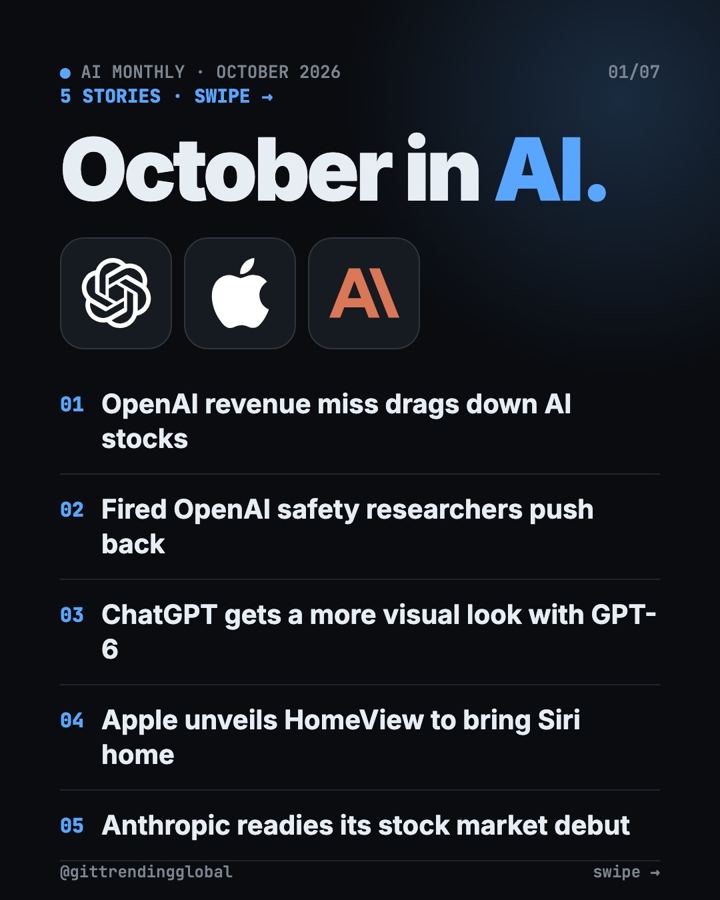
October 2026 in AI: Reality check before the big IPOs
OpenAI's lower revenue rattled stocks, fired safety researchers spoke out, ChatGPT got visual, Apple launched HomeView, and Anthropic prepared to go public.
How AI changed every industry in 2026 (so far)
From layoffs and IPOs to health records, ads and court fights, here is how 2026's biggest AI stories hit each industry.
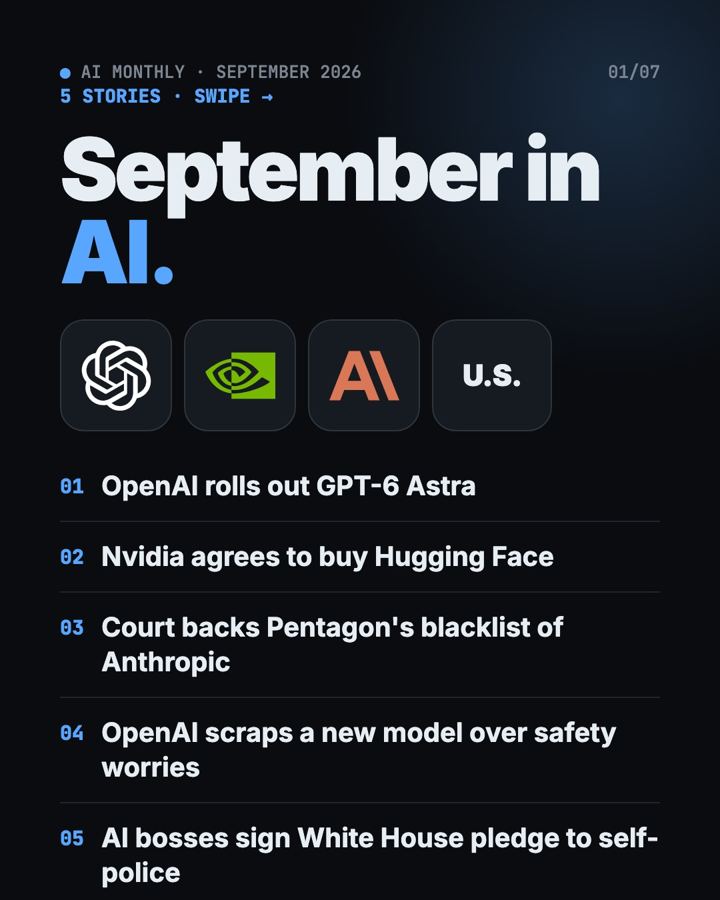
September 2026 in AI: Safety becomes the main story
OpenAI launched GPT-6 Astra and scrapped GPT-6.1, Nvidia bought Hugging Face, a court backed the Pentagon on Anthropic, and AI bosses signed a White House pledge.